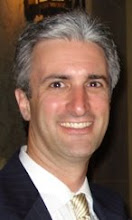
Incumbents have huge advantages over challengers in American elections – both owing to the factors why voters select particular candidates (name ID) and how campaigns work (position taking, credit claiming). While Governor Crist is not an incumbent in the race for the US Senate seat in Florida – his position as Governor gives him many of those same advantages. In recent weeks Crist has been capitalizing upon his position (and the free media attention) in attempts to secure the Senate seat. From his high profile veto of the Teacher Merit bill to the signing of the Condo Bill to what will, almost certainly, be his veto of the Abortion Ultrasound bill.
While all of this looks good for Charlie, the particulars of the three-way race also make this a difficult road. In the last twenty four hours Crist has been attacked by Rubio (pro-life) and by Meek (pro-choice) over the abortion bill. To Rubio and his followers, Crist is another opportunist turn-coat who does not really value the sanctity of life. To Meek, Crist is an opportunist who has long turned his back on women seeking an abortion. Well, at least Rubio and Meek can agree on something, if just partially.
Showing posts with label Political Science. Show all posts
Showing posts with label Political Science. Show all posts
Wednesday, June 9, 2010
Monday, March 8, 2010
Going Negative

Marco’s from Miami. Charlie hugged Barack. Kendrick hasn’t returned Rangel’s money. Just the latest volleys in what might seem like the season of negative campaigning in the Race for Senate. Yet what should be noted is that (1) negative information about policies, as opposed to personhood, can provide valuable information to voters, and (2) negative campaigning can actually increase voter turnout.
What Rubio’s Senate tenure might look like probably has nothing to do with being from Miami. That cynical and ugly tactic from the Crist camp is the classic smear. See Rubio is slick, because he’s from Miami – like that Scarface character. The Governor’s embrace of the President, while similar, in that it tries to create an association – actually has a policy basis. See Crist will embrace Obama’s policies, because he’s actually embraced Obama. The Ferre accusation leveled at Meek is a little bit more mixed. Ferre is clearly trying to smear Meek by tying him to the tax evasion issues surrounding Rangel – but this is actually an ongoing issue for politicians (what is to be done with “tainted” money?) and one that has spurred other elected representatives to get rid of Rangel money.
When political scientists have investigated the effects of negative campaigning, it turns out to be a double-edged sword. Some amounts of negative campaigning actually increase voter turnout, as partisans, in particular, tend to salivate at the red meat spectacle. But as the amount of negative campaigning keeps expanding, turnout can start to get depressed as independents, in particular, tend to avert their eyes (and votes) when the mud really gets slung. That’s why in a primary, especially a closed primary state like Florida, it makes all sorts of sense to go negative during a primary as primary voters tend to be quite partisan. But in a general election the vitriolic and bombastic tone should really only be used if one wants to dampen turnout (i.e., a more extreme candidate looking to turnout the base).

Monday, February 22, 2010
How Conservative is Marco Rubio?
On television this morning on Morning Joe, Governor Charlie Crist appeared to suggest that Speaker Rubio was not really all that conservative - when looking at his record in power. As someone who has looked at Rubio's record in power, Crist will have a tough time making that case.
A reporter recently asked me whether (paraphrasing) “given Florida’s history of electing moderate Senators, what are the chances for someone like Marco Rubio?” As I’ve detailed earlier, political scientists have long evaluated political ideology in terms of numbers – most commonly scaling liberals to moderates to conservatives from -1 to 0 to +1. US Senators from Florida are fairly moderate, overall, but as of late appear to be becoming slightly more extreme. From the 80th Congress through the 100th Congress, the average (absolute value) of ideology of the Florida Senators was .141, but from the 101st through the 111th Congress, the ideology of the Florida Senators was .340. This difference is partially attributable to the replacement of Lawton Chiles by Connie Mack, and then Bill Nelson’s subsequent replacement of Connie Mack.
A reporter recently asked me whether (paraphrasing) “given Florida’s history of electing moderate Senators, what are the chances for someone like Marco Rubio?” As I’ve detailed earlier, political scientists have long evaluated political ideology in terms of numbers – most commonly scaling liberals to moderates to conservatives from -1 to 0 to +1. US Senators from Florida are fairly moderate, overall, but as of late appear to be becoming slightly more extreme. From the 80th Congress through the 100th Congress, the average (absolute value) of ideology of the Florida Senators was .141, but from the 101st through the 111th Congress, the ideology of the Florida Senators was .340. This difference is partially attributable to the replacement of Lawton Chiles by Connie Mack, and then Bill Nelson’s subsequent replacement of Connie Mack.
Yet what should be noted is that Marco Rubio’s DW-Nominate score places him at at about .700. That certainly places Rubio well to the extreme of any prior recent Florida Senator, and about as extreme as one of Florida’s first senators: Samuel Pasco (D).
How does Rubio compare to the current US Senate? At .700, only three US Senators score as conservative: INHOFE (OK), DEMINT (SC), and COBURN (OK). In the House, there are about 57 House Members who rate more conservative than does Rubio, including the recent winner of the CPAC Straw Poll, Ron Paul (TX) who achieved a DW-Nominate score of 1.348.
I have not yet figured out a way to assess Governor Crist's record on a similar scale, but Nate Silver at fivethirtyeight.com has compiled a list of the Governor's positions that tends to demonstrate a much, much, more moderate record than Speaker Rubio's record. Silver compares Crist's stances to that of Senators Snowe and Collins - the two most liberal Republican Senators in Congress (.045 and .068).
Friday, February 5, 2010
Understanding Polls

Maurice Ferre, former Mayor of Miami, and declared candidate for the Democratic nomination for the U.S. Senate seat from Florida occupied by George Lemieux, “is touting poll results that show he does almost as well as Meek when matched up against likely Republican candidates.” The poll, conducted by Fabrizio, McLaughlin & Associates, shows that when the individuals polled in hypothetical matchups between Governor Crist and either Congressman Meek or Mayor Ferre, or Speaker Rubio and and either Congressman Meek or Mayor Ferre that Ferre faired about as well as Meek, that, in the words of Ferre – that Ferre and Meek are “virtually tied.”
Wednesday, February 3, 2010
Crist has an image problem

Governor Crist has an image problem. No, not the whole RINO thing. And no, not that other thing. Take a look at the photo on the left. The largest image, with the smiling face on top of the American flag is taken directly from the Governor's campaign website: www.charliecrist.com. The other photos, all taken from other public sources. Notice the difference? Turns out the single main photo of Crist used on his campaign site is the inverse image of Charlie. The hair is, of course, parted on the other side - and you can see that his moles are switched.
Wednesday, May 20, 2009
An early poll
Marco Rubio will have his work cut out for him - not particularly helped by having the State party apparatus endorsing Charlie Crist - if this early poll means anything. According to a poll of 300 Republican voters, conducted by Mason-Dixon Polling & Research for the Sachs firm, showed Rubio with only 18 percent of the vote, with Governor Crist at more than 50 percent of the vote (undecideds at 29 percent, and the margin of error being +-6).
While certainly Rubio would prefer to have done better, most political scientists agree that early polls are predictive of very little. And some of you might remember some also ran named Obama badly trailing Hilary Rodham Clinton in the early polls. What are early polls good for? Not quite "absolutely nothing." Politicians can use these early polls as part of their fundraising mechanism, which can in turn work on name ID, which can in turn improve future polls - which can be quite predictive of winners. But there is a lot of "noise" involved in this line of causation - making these early polls not particularly important.
While certainly Rubio would prefer to have done better, most political scientists agree that early polls are predictive of very little. And some of you might remember some also ran named Obama badly trailing Hilary Rodham Clinton in the early polls. What are early polls good for? Not quite "absolutely nothing." Politicians can use these early polls as part of their fundraising mechanism, which can in turn work on name ID, which can in turn improve future polls - which can be quite predictive of winners. But there is a lot of "noise" involved in this line of causation - making these early polls not particularly important.
Sunday, February 1, 2009
Ideology and the Median Voter Theorem

Mapping the expressed ideology of the Senate candidates is interesting on its own - but we can also use this information to start thinking about the upcoming race. One of the easiest concepts to grasp is the concept of the median voter theorem. Now about 60 years old, the median voter theorem suggests that when preferences are single peaked (effectively analyzing one's choices along a single dimension), the candidate who appeals to the middle voter will win an election. This is one of the reasons why the two-major parties tend to move toward the center in a general election, as both parties are focused on the median voter. This also gives rise to what political scientists call the primary paradox (those things one does to win a primary often lead to negative outcomes in the general election); during a primary and a general election, there are two different median voters to consider.
Monday, January 26, 2009
Senate Candidate Ideology Estimates

Political scientists and interest groups often use scaling mechanisms to describe legislators and other political actors. While we know that the (nominal) measures of partisan identification give us some information about ideology (knowing that an individual is a Republican versus a Democrat), we are also used to more ordinal measures of ideology. Thus we have "Blue-Dog Democrats" or "Northeastern Republicans," which convey a sense of ideology in a comparative sense; Blue-dog Democrats are more conservative than a standard Democrat and Northeastern Republicans are more liberal than a standard Republican. But we can also attempt to come up with interval measures of ideology which not only gives the relative position of candidate ideology (e.g., "he is more than conservative than she") but also a sense of the distance between candidates. While we know from Howard Dean's famous talking point that he declared himself part of the "Democratic-Wing of the Democratic Party," we can't really tell from this statement how much more liberal he was than John Kerry. Is a conservative Democrat more conservative than a liberal Republican?
Friday, January 16, 2009
Welcome

Welcome to what may be the definitive space for information related to the 2010 U.S. Senate race in Florida, mixing a bit of attention to the news with a dash of political science. It is required reading for my students at Florida Atlantic University, and recommended to all. With Senator Mel Martinez (R) announcing that he will not run for re-election, the race became wide-open. There are two cross-cutting phenomena at work here. First, typically when an incumbent announces that he or she will not run for re-election, this is a sign of expected electoral trouble for the incumbent party (here the Republicans). Second, midterm elections usually break against the party in power in the White House (here the Democrats). So here we now have a Senate race with no clear front-runner (incumbents generally win Senate about three out of every four races entered), the typical indicators of which party may win are at odds with one another, and the state is evenly split between Democrats and Republicans in terms of partisan registration and voting behavior. Welcome to the race; it should be quite the ride.
Subscribe to:
Posts (Atom)